
You are using an out of date browser. It may not display this or other websites correctly.
You should upgrade or use an alternative browser.
You should upgrade or use an alternative browser.
Recent art that you liked
- Thread starter brianvds
- Start date


stlukesguild
Well-known member
- Messages
- 3,068
It seems that painting and calligraphy were part of the average education for the upper classes or the educated in the past. I’ve seen painting by authors such as Edgar Allen Poe and Victoria Hugo and they could easily be accepted into most art schools from the last 100 years.
stlukesguild
Well-known member
- Messages
- 3,068
I just came upon these two paintings by Robert Winthrop Chanler (American, 1872-1930). He was an American artist whose works merged elements of the decorative with the bizarre. He was a member of the Astor and Stuyvesant families… both wealthy and politically connected families in the US. His personal life included a whirlwind romance with the beautiful and talented soprano, Lina Cavalieri…
The married in June, 1910 but were separated by the end of their Honeymoon. His murals often involved the use of plaster, sculpted gesso, and gilding. Among his murals is a decorative ceiling at the Gertrude Vanderbilt Whitney Studio.
stlukesguild
Well-known member
- Messages
- 3,068
Another interesting painting I just stumbled upon is Good Night by Francesco Fonseco:


- Messages
- 518
Looks pretty real to me. The article I saw it in was an interview about his work, and included several progress photos from his initial still-life setup, beginning sketch, grisaille, glazing and detail layers. Including several shots of him actively in the studio.
He has several other similarly impressive oil paintings you can easily find, and is represented by Gallery Henoch in New York.
He has several other similarly impressive oil paintings you can easily find, and is represented by Gallery Henoch in New York.

Bongo
Well-known member
- Messages
- 1,760
I was being facisius. I have no reason to doubt it.
But every picture or video I see on youtube - the first comments are accusing works of being "Ai" and it's becoming increasingly hard/impossible to tell. People are creating fake preliminary work to "prove" their work is original and not Ai.
THere is this forum I sometimes visit, where people create, share, sell, and commission digital fantasy art. Many claim Ai work is original just to gain likes, prestige-followers. The moderator is a forensic expert in detecting Ai fraud. All the work on the site is digital fantasy art, created by digital artists with no Ai allowed. It is amazing the tell-tale minutiae that are uncovered to expose Ai work. No doubt Ai will soon learn to cover those tracks as well
But every picture or video I see on youtube - the first comments are accusing works of being "Ai" and it's becoming increasingly hard/impossible to tell. People are creating fake preliminary work to "prove" their work is original and not Ai.
THere is this forum I sometimes visit, where people create, share, sell, and commission digital fantasy art. Many claim Ai work is original just to gain likes, prestige-followers. The moderator is a forensic expert in detecting Ai fraud. All the work on the site is digital fantasy art, created by digital artists with no Ai allowed. It is amazing the tell-tale minutiae that are uncovered to expose Ai work. No doubt Ai will soon learn to cover those tracks as well

Hermes2020
Well-known member
- Messages
- 1,977

brianvds
Well-known member
- Messages
- 1,376
Not sure I like this one, but its backstory is of interest, so I'll pop it in here:

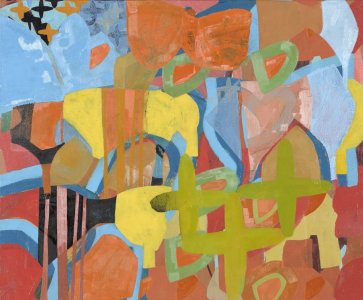
Wolfe von Lenkiewicz - A Promise [2025] Oil on canvas, 50 x 50 cm.
I found the image on Gandalf's Gallery, and what is of interest to me here is the description:
The artwork is created by generating initial concepts using AI algorithms, which are then meticulously painted onto canvas using traditional oil painting techniques. Lenkiewicz reconfigures iconic imagery from art history and visual culture to create ambiguous, psychological scenes that explore themes of identity and intimacy
I was wondering just yesterday when we would see more and more of this: using AI to create reference images to paint from. Does it open an ethical can of worms? Perhaps a godsend for those of us who, like me, don't have much of a visual imagination? How would one even be able to tell whether the artist copied an AI-generated image as opposed to creating his own? And as AI uses ever more AI-generated imagery to train on, where will this (assuming it becomes very common) lead AI-generated imagery? Already it seems caught in a loop which Nassim Taleb referred to as "a self-licking lollipop", which is perhaps partly why AI-generated art is ever more recognizable as such - it seems to have a particular "look" about it.
We sure are tumlbing down an ever deepening rabbit hole...
Wolfe von Lenkiewicz - A Promise [2025] Oil on canvas, 50 x 50 cm.
I found the image on Gandalf's Gallery, and what is of interest to me here is the description:
The artwork is created by generating initial concepts using AI algorithms, which are then meticulously painted onto canvas using traditional oil painting techniques. Lenkiewicz reconfigures iconic imagery from art history and visual culture to create ambiguous, psychological scenes that explore themes of identity and intimacy
I was wondering just yesterday when we would see more and more of this: using AI to create reference images to paint from. Does it open an ethical can of worms? Perhaps a godsend for those of us who, like me, don't have much of a visual imagination? How would one even be able to tell whether the artist copied an AI-generated image as opposed to creating his own? And as AI uses ever more AI-generated imagery to train on, where will this (assuming it becomes very common) lead AI-generated imagery? Already it seems caught in a loop which Nassim Taleb referred to as "a self-licking lollipop", which is perhaps partly why AI-generated art is ever more recognizable as such - it seems to have a particular "look" about it.
We sure are tumlbing down an ever deepening rabbit hole...
Bongo
Well-known member
- Messages
- 1,760
I see nothing wrong with creating an AI image, which you then use as a reference for painting. And I think the ethics of it would be similar to using photographic references. Just as if you take your own photo and use it as a reference, so too if you make your own AI image to use as a reference, there should be no impetus to qualify the painting as such. In other words, the painting would be ex-."" 16"x20" Oil on canvas. ""-- and not ""16x20" AI oil on canvas"-- or some variation
In fact technically, any AI image used as reference - self-created or not - would not require permission or to be divulged -- since AI images cannot be copyrighted
Several years ago I made some AI images using an early generation of Dali E. for the purpose of painting references. They were laughably out loud ridiculous - totally unusable. This due to my inability to write a decent prompt and the program being so primative.
Now things have changed. And I plan to try AI again- and I see nothing legally or ethically wrong.
In fact technically, any AI image used as reference - self-created or not - would not require permission or to be divulged -- since AI images cannot be copyrighted
Several years ago I made some AI images using an early generation of Dali E. for the purpose of painting references. They were laughably out loud ridiculous - totally unusable. This due to my inability to write a decent prompt and the program being so primative.
Now things have changed. And I plan to try AI again- and I see nothing legally or ethically wrong.

Hermes2020
Well-known member
- Messages
- 1,977
I like Richard Stabbert's brushwork, clearly seen in these two recent paintings.


- Messages
- 1,674
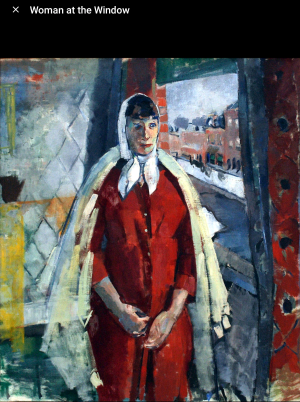
Discovered this artist recently. Hendrik Emil (Rik) Wouters (21 August 1882 – 11 July 1916) was a Belgian painter, sculptor and draughtsman. This image appealed.

 en.wikipedia.org
Wouters produced 200 paintings, drawings and sculptures in his 34 years before his illness-caused death. He died partway through the First World War on 11 July 1916 in Amsterdam.
Rik Wouters - Wikipedia
Wouters produced 200 paintings, drawings and sculptures in his 34 years before his illness-caused death. He died partway through the First World War on 11 July 1916 in Amsterdam.

laf.art
Well-known member
- Messages
- 1,627
Spot on as he usually is.Banksy's latest sculptural stunt in London. Simply amazing.
brianvds
Well-known member
- Messages
- 1,376
I see nothing wrong with creating an AI image, which you then use as a reference for painting. And I think the ethics of it would be similar to using photographic references. Just as if you take your own photo and use it as a reference, so too if you make your own AI image to use as a reference, there should be no impetus to qualify the painting as such. In other words, the painting would be ex-."" 16"x20" Oil on canvas. ""-- and not ""16x20" AI oil on canvas"-- or some variation
In fact technically, any AI image used as reference - self-created or not - would not require permission or to be divulged -- since AI images cannot be copyrighted
Several years ago I made some AI images using an early generation of Dali E. for the purpose of painting references. They were laughably out loud ridiculous - totally unusable. This due to my inability to write a decent prompt and the program being so primative.
Now things have changed. And I plan to try AI again- and I see nothing legally or ethically wrong.
Apologies for this rather late reply - I have been laid low first by food poisoning or something like it, and then by the flu. Now I'm finally slowly returning to life.
Now I don't want to endlessly debate the issue either, because if truth be told, I have not quite decided yet how I feel about it myself.
Seems to me there are several possible lines of argument. Artists often complain about AI stealing their work. But if we do that, and then use AI-generated imagery to paint from, surely we are then also stealing? Also on the con side: some of the pictures generated by AI are actually quite beautiful, and at least on screen look for all the world like real paintings. I worry that if I start working from such images, I'll end up getting very lazy. The AI has already done most of the creative work!
But one can also argue from a different angle. E.g. take Caravaggio and his followers: he came up with a radically new style of painting, and within a decade, Europe was filled with "Caravaggists" all painting in the same style. I.e. they trained themselves on his style and methods and followed suit. And one may ask: isn't this really precisely what AIs do when they get trained on this or that artist's style? We can copyright a picture, but we cannot copyright a style, and thus, I am not too sure that there is in fact anything wrong with using AI to generate whatever pictures we like. It is bad news though for artists such as illustrators who make their income primarily from reproductions. But then, it wouldn't be the first or last time that entire categories of jobs got supplanted by machinery.
Another thought occurred to me: any and all art has always been a combination of a human mind, hand and some or other form of technology. This goes for everything from cave art to Andy Warhol prints. And thus, one may argue that using AI to generate reference imagery is just one more example of using whatever technology is available.
As I note above, I have not quite worked out what my own feelings about it are. The temptation is there, because AI imagery is now ubiquitous - you don't even have to write your own prompts, because perfectly beautiful and usable images are all over such sites as Pinterest, and because they are AI-generated, they are copyright-free. (It's a good question whether, if you make a copy of such an image, you can then copyright your copy!)
AI can generate quite beautiful pictures nowadays. What it cannot do is to turn any of them into original, hand-painted pictures. So maybe we're witnessing a whole new thing in art, where the artist's main job is to translate the AI-generated image into attractive brush strokes. Sooner or later printing tech will catch up, and prints that have a brush stroke effect so perfect that it looks like real human-made brush strokes will become cheap and widely available, and then perhaps the remaining pool of human artists will shrink a bit more.
Anyway, such are my dubious thoughts about the issue.


