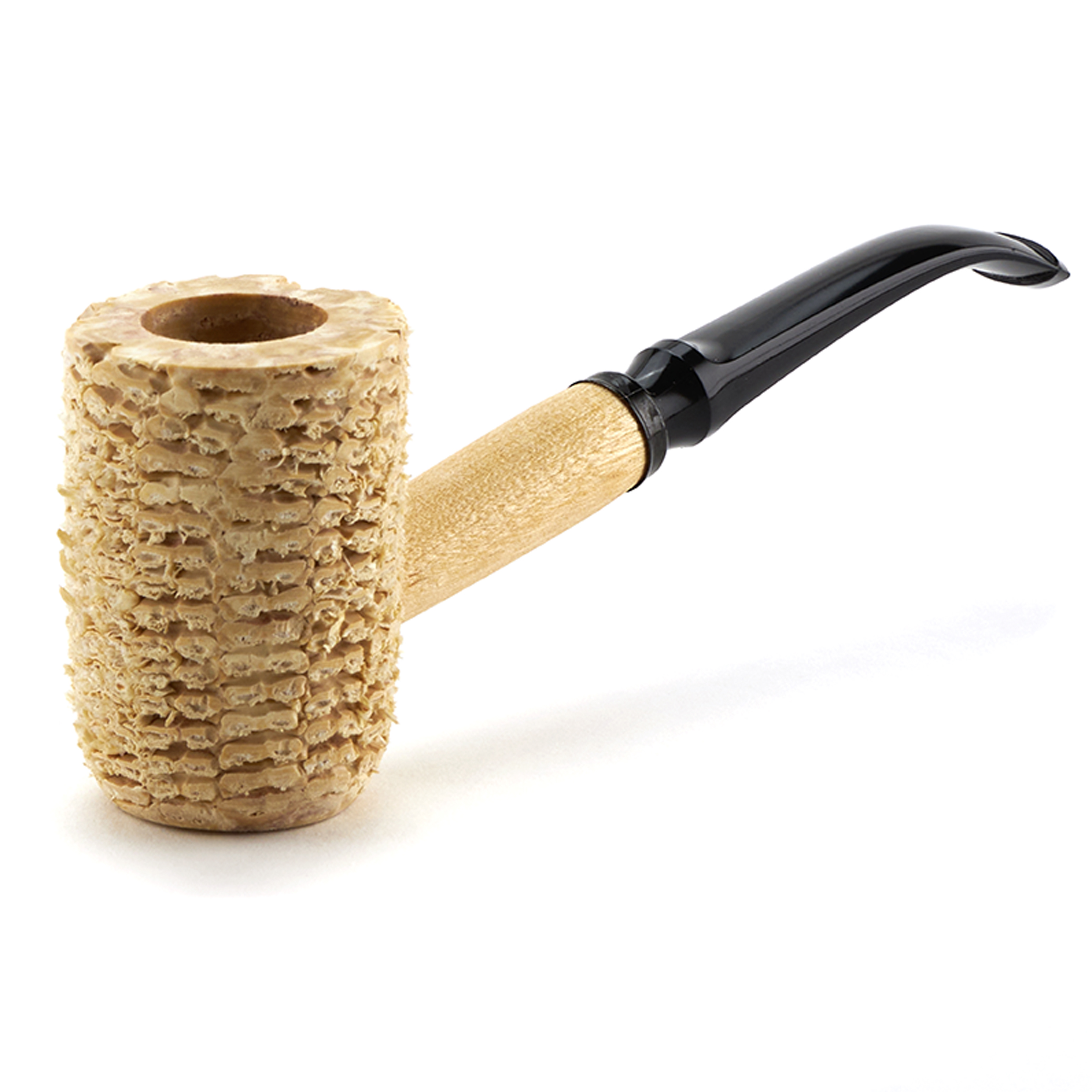
this is not a pipe

Bongo

Well-known member
Messages
1,702
For the most part, I'm all about the image - show me the image - I don't give a rat's *ss how it was made.

Except I'm also a connoisseur of certain art forms. And for those art forms and others like those, it matters VERY MUCH how it was made.

I make plein air paintings. A plein air painting, by definition, is a painting made in one session by an artist on location, depicting the scene in front of them. not a jpeg made up on a computer or a painting made in a studio. It has mass and weight and was produced in a very specific way. So if you're not just fond of plein-air-style images but a connoissueur of the art form, then (at least for now) A.I. can't do it.

I'm also a street photographer. A street photo by definition, is a genre of photography that captures candid, unposed moments of everyday life in public spaces. AI can make street-photo-style images of made-up people in a made-up scene or paste photos of real people on photos of real scenes but that is not street photography. If you're not just fond of street photos, but a connoisseur of the art form, then (at least for now) A.I. can't do it.

This is a clarion call to bring back connoisseurship. The point is NOT just that it's made by people, - people can make fake plein-air and street photos too, just like A.I. It's the protocol, time-honored traditions that should be protected and cherished imo. And not just my examples - but other art forms too.
 
Well, Bongo, something got your goat, I see.

FWIW, I disagree with your definition of "plein air", in that it doesn't need to be done in one session, nor 100% outdoors. Yet in my own practice that is exactly what I do deliberately. You can start a painting and do it 80% in situ alla prima and still polish it off in a studio and most PA artists I know and juried shows would accept this. Not the way I paint, but that is a fact of life for others.

None-the-less, I agree with the feelings you express about AI "art" and your definition of street photography to a degree. The difference is that street cameras that are automated can make pix from real life that are candid, but lacking a human artist it isn't really street photography at all nor art in my book

Totally agree that connoisseurship or some such is still vital to art. We are likely to both be replaced by AI soon with nobody raising a protest nor a fuss, however. (Sad emoji)
 
not going to get in a pissing contest about definitions, I put them up loosely just for illustration purposes.

Please bear with me while I use myself as an example of what I mean by connoisseurship, and connoisseurship is probably the wrong word to describe what I mean.

I paint and photograph to please myself.... obviously, since I make little-to-no effort to show or sell my work. What other reason could there be. So if I'm just out to please myself, why don't I just eat cake and masturbate all day? Would be a lot easier and arguably more pleasing. Because part of the pleasure or satisfaction is feeling connected to a tradition, part of something larger than myself. And not to pastry and self-abuse, but to plein-air and street photography.

And trust me I know that connection is not just tenuous , but a fantasy. But , at the end of the day, you live in your head.
My bros - Pete "the street" Brown, Roos Schuring,-- Gary Winogrand, Joel Meyerowitz, and so on. I'm not a Walter Mitty, it's not cos-play just a thought in back-of-mind that helps get me thru the day.

The connoisseurship comes in by distinguishing their work (and mine) as different (by definition) from other art forms.
"The difference that makes a difference" Gregory Bateson

I could work the streets with Joel, or put up an easel next to Roos, and be comfortable - even though they are leagues more acccomplished - because we share a tradition, a protocol, an aesthetic.
 
Last edited:
I think definitions catalyse the development of art, since definitions define boundaries. Those boundaries are thorns in the sides of some creatives, who may be inspired to break free and steer art into exciting new directions. Without these "revolutionaries", art would simply stagnate and become meaningless. The development of Impressionism is a good example of my proposal.
 
If a word describes something that has no meaning, then that word has no meaning.

Example:
What is art - anything.
Therefore anyone that makes anything is an artist.
NO, you also have to call yourself an Artist.
So anyone that calls themself an Artist and makes anything is an artist.
YES, BUT - you don't have to make anything you can just call yourself an Artist.
AND - anything can be art even if it's not made by an Artist.

So, I'm an Artist - okay. And that lawnchair is art.- okay

If there are no categories, no definitions, then there is nothing to revolt against. It could be argued that part of the deplorable state the "artworld" is in now is that it its full of revolutionaries with nothing to revolt against.

Your impressionist is a good example the Paris Salon didn't stop the impressionist from making their paintings, they just said
not in our Gallery. So the impressionist formed their own group and thrived.

I'm a plein-air painter and a street photographer -- not an Artist,because I have no idea what that word means.
 
I'm not a plein air artist at all, but I find the premise of the discussion very interesting. The idea of definitions and revolts. Bongo has a great point about art and artists, but everyone has their own (biased) definition of what both of these things are. Sometimes, that's the issue. Maybe we just need a simple dictionary answer of what art is, and then color outside those lines sometimes, never, or always. In that dictionary under "art," it should probably state, "it doesn't matter."
 
I don't know why I got so wound up about the definition of Art being vague - the same is true for "Writer", do you write novels or grocery lists? A Musician -triangle or oboe? A Doctor - Medicine or Philosophy?

I'm not concerned about what people call themselves, I just don't want the specific lost to the general. There are reasons why companies are so zealous about trademarks. If not, then any facial tissue is a Kleenex, any photocopy is a Xerox.

If a Plein-air painting can be created in the studio, if a street photo can be posed and not candid, if we let definitions become too diluted, then they are just Pictures, no different than an A.I. or a print. Watercolor, multi-media, pastels, oil, acrylic, charcoal, pencil -- all just Pictures no different than A.I. or a print. Yes, they are all pictures, but no, there are differences. We need to guard against the specific being consumed by the general. For marketing as well as for history and tradition.
 
Last edited:
What we need is that everybody learns to ask about the specifics.

I have no objection for people who merely wants a nice image to use AI generated, photographs, paintings, stamps or even a printout of a selfie.

What I worry is about abuse of generalization and expectations to make pass something for what it is not. Against that you can only demand specificity and accountability, so that if someone tries to make an AI-generated image (or a Rubens' picture, but that is less unlikely) for their own hand-made work and they succeed in convincing someone, they can be held accountable for their misrepresentation.

Then, those who want works of art or craft can get it, and those who don't care can get anything (within their allowable limits) too. If someone wants an Stradivarius, let them, and if someone just can do with a $1 toy xylophone, let them too. But to each their due.
 
This is not a pipe because it’s not.

It’s the representation of a pipe : you can’t hold it or smoke it or smell it. It’s merely a sign. Of all the senses you can only see it.

Is that what art is, merely a sign representing something else?

So it’s not a pipe, it’s a painting. It exists as itself, a painting on the wall, like the table or chair in the room. Except the chair’s not a representation, it’s the actual thing, not a sign. The only real thing about the painting is the canvas, frame paint, texture and smell.

The pipe, the sign, exists in the mind.
 
Just saw an article in CNN.com about luxury fashion brands declining quality. One sentence caught my eye: Dana Thomas said “they were switching their focus from beautiful products to beautiful profits” and “If your entire raison d’etre is to bring profits to shareholders, you are no longer in the business of making luxury; you’re just in the business of making money.”

I think something similar explains all this fuzz: people centered on making money figure AI as a way to churn out loads of profits with minimum cost and tout it as the only art that will survive AI. Mainly because if you buy the premise you will also buy their "mass-produced" low-quality crap and neglect the good-quality, expensive-to-produce, low-margin goods.

A lot of people, however, turns away from the luxury market as quality degrades, looking for better, more durable, well-crafted goods: quoting the article "However, increasing scrutiny — and in some cases, distrust — of luxury brands has also created new opportunities. According to McKinsey & Company’s 2026 “State of Fashion” report with the Business of Fashion, the mid-market is “the fastest growing segment,”".

I hope something similar happens to the Art market: that money-making machines will turn to AI as a godsend, but customers will still appreciate quality art and look for genuine craftmanship, works they can be proud of, and will be willing to pay for it. But there is no way I can know the future, so don't take it for granted.

Yet, I like to believe that artists who are genuinely ingenious, who pride in their work and care for its quality will -like in the article I mention- succeed, and refuse the calls by money-monsters to avoid their work being degraded, and still find customers appreciating and willing to pay for their works.
 
If quality degrades then it’s no longer a luxury item, unless it’s rare and consequently regarded as a luxury. Well-crafted goods are generally regarded as a luxury. People will pay pay good money for something like a hand made table, with fine craftsmanship. That puts it in the luxury category.
Who of the people that always purchased luxury item is turning awayfrom them? As long as people have enough money there will be luxury items to purchase. And as long as they’re there people will produce luxury items.

I don’t see AI as a threat to art. It might churn out art but it won’t satisfy a discerning buyer. It might thrive in producing cheaper art for people who use it as decoration, but it won’t reach real art lovers. But you’re right in that AI might cause people to focus more on what we produce as people. Creativity is a human endeavour. Even that might become a rare luxury if we continue with the idea that there’s no such thing as “good” art and everyone’s an artist.
 
In that I must fully agree with you. We are flooded with apocalyptical predictions that AI will be the end of everything, much like many other technologies before, but let us not forget that we are humans and, for us, it is human endeavor that really appeals and inspires us, and that, means that there will always be human lovers of human art.

Added: anyone read Philip K. Dick's "Do androids dream of electric sheep?". In the Blade Runner world it describes, animals become rare, having one becomes "posh", most people can only get a mechanical one, but everybody dreams of having the "real thing". Personally, I think that, while most of us are forced to be satisfied with more or less quality mass-produce, mechanical reproductions, most of us would still prefer -if we could- to have a real work of art instead. Notwithstanding our own works and motivations.

But I may be wrong.
 
Last edited:
In that I must fully agree with you. We are flooded with apocalyptical predictions that AI will be the end of everything, much like many other technologies before, but let us not forget that we are humans and, for us, it is human endeavor that really appeals and inspires us, and that, means that there will always be human lovers of human art.

Added: anyone read Philip K. Dick's "Do androids dream of electric sheep?". In the Blade Runner world it describes, animals become rare, having one becomes "posh", most people can only get a mechanical one, but everybody dreams of having the "real thing". Personally, I think that, while most of us are forced to be satisfied with more or less quality mass-produce, mechanical reproductions, most of us would still prefer -if we could- to have a real work of art instead. Notwithstanding our own works and motivations.

But I may be wrong.

Hopefully we’ll still be able to go and look at “the real thing”, unless certain elements in society redefine “real”.
 
Back
Top